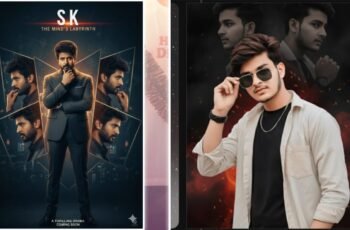
Have you ever looked at a nearly perfect photo and thought, “If only I could move that trash can,” or “I wish I were wearing a tuxedo instead of a hoodie”? Well, welcome to 2026, where your wish is literally a text box away. An ai photo editor with prompt capabilities has turned everyone into a digital sorcerer. You don’t need to spend years mastering complex layers or expensive brushes anymore. Instead, you just talk to your computer like it’s a friend who happens to be a world-class graphic designer. It is like having a magic wand that understands English, allowing you to rewrite reality with a few keystrokes.
Whether you are a casual selfie-taker or a small business owner, using an ai photo editor with prompt tech saves you hours of frustration. Think of it as a conversation. You tell the software what you want, and it builds it for you in seconds. This isn’t just about slapping on a filter; it’s about generative intelligence creating brand-new pixels that blend perfectly with your original shot. You can change a rainy afternoon into a golden hour sunset or swap a boring office background for a tropical beach. The power is truly in your hands, or rather, your fingertips.
How Does an AI Photo Editor With Prompt Actually Work?
Imagine you are standing next to a professional painter. You don’t grab the brush yourself; you just say, “Hey, can you add some fluffy clouds and maybe a happy little tree over there?” That is exactly how an ai photo editor with prompt functions. Behind the scenes, these tools use massive neural networks that have “seen” billions of images. They understand what a “happy little tree” looks like from every angle and in every lighting condition. When you type your request, the AI interprets your words and generates a visual solution that matches the texture, lighting, and perspective of your existing photo.
The beauty of this system lies in its simplicity. Most modern editors, like the latest 2026 versions of Adobe Firefly or Gemini’s Nano Banana 2, use a process called diffusion. This is basically the AI starting with a “noisy” or blurry version of your request and refining it until it’s crystal clear. Because you are using an ai photo editor with prompt features, you aren’t limited by the physical objects in the frame. If you want to add a dragon flying in the background of your backyard barbecue, the AI knows how to make that dragon look like it actually belongs in the sky above your grill. It’s all about the synergy between your imagination and the machine’s deep learning.
The Heavy Hitters: Best Tools for Prompt-Based Editing in 2026
In the current landscape, not all tools are created equal. If you are looking for the absolute best ai photo editor with prompt functionality, you have several stellar options depending on your needs. For the pros, Adobe Photoshop remains the king. Its “Generative Fill” feature has become so advanced that it can reconstruct entire missing sections of a photo with frightening accuracy. You just select a blank area, type “medieval castle on a hill,” and boom—you’ve got a fortress that looks like it’s been there for centuries. It’s the gold standard for anyone who needs high-resolution, professional-grade results.
On the other hand, if you want something more accessible, Canva’s Magic Studio is a literal lifesaver. It’s the perfect ai photo editor with prompt for social media managers and hobbyists. You can highlight your old sneakers and tell the AI to “turn these into shiny red boots,” and it happens instantly. For those who prefer a conversational approach, the new 2026 Gemini integration allows you to upload a photo and simply chat about the changes you want. You can say, “Make the lighting moodier,” and the AI adjusts the shadows and highlights as if it’s reading your mind.
Adobe Photoshop and the Wizardry of Generative Fill
Adobe has truly pushed the boundaries of what an ai photo editor with prompt can do this year. Their Firefly model is now more ethically sourced and visually stunning than ever. The coolest part about using Photoshop’s prompt system is the “Reference Image” feature. You can provide a prompt like “Add a vintage car,” but then also upload a photo of a specific 1967 Mustang you like. The AI will then generate that exact car, matching the lighting of your scene. It’s a level of control that was unthinkable just a few years ago.
The interface is also surprisingly friendly now. You don’t have to navigate a maze of menus to find the generative tools. They sit right there on a contextual taskbar, waiting for your input. When you use an ai photo editor with prompt in this ecosystem, you also get multiple “variations.” The AI gives you three or four different versions of your request, and you just pick the one that looks the best. If none of them are perfect, you just tweak your words and try again. It’s like an infinite “undo” button for the real world.
Canva Magic Studio: Design for the Rest of Us
Canva has always been about democratizing design, and their latest ai photo editor with prompt tools are no exception. Their Magic Edit tool is specifically designed for people who don’t want to learn the “big” software but still want “big” results. It’s incredibly intuitive: you brush over the part of the image you want to change, type in your new idea, and watch the transformation. Whether you’re trying to remove a distracting ex-boyfriend from a vacation photo or change the color of a flower, Canva makes it feel like a game.
What’s even better is their “Magic Expansion” feature. Have you ever taken a great portrait but realized you cropped the top of your head off? With an ai photo editor with prompt like Canva, you can just tell the AI to “expand the image” and describe what should be there. It will “hallucinate” the rest of your hair, the background, and even the sky above you. It’s perfect for turning a vertical phone photo into a wide-screen masterpiece for your website or a YouTube thumbnail.
Quick Fixes and Mobile Magic
We can’t talk about 2026 without mentioning the mobile revolution. You now have access to a powerful ai photo editor with prompt right on your smartphone. Apps like Lensa and the mobile version of Pixlr allow you to make complex edits while you’re sitting on the bus. You can snap a photo of your lunch, type “make this look like a 5-star Michelin meal,” and the AI will add garnish, improve the plating, and fix the lighting before you’ve even taken your first bite.
These mobile tools are specifically optimized for speed. They often use “one-tap prompts” where you can select common requests like “Remove Background” or “Cyberpunk Style” without even typing. However, the real power still lies in the custom text box. By using an ai photo editor with prompt on your phone, you are essentially carrying a full-scale production studio in your pocket. It’s perfect for creators who need to post high-quality content on the fly without dragging a laptop around.
Mastering the Art of the Prompt: Tips for Perfection
To get the most out of your ai photo editor with prompt, you need to learn the “language” of the AI. Think of it like giving directions to a very literal-minded person. If you just say “make it look better,” the AI won’t know if you mean brighter, sharper, or more artistic. Instead, be specific. Use a “recipe” for your prompts: Subject + Action + Setting + Style. For example, instead of “a dog,” try “a golden retriever running through a field of daisies in the style of a cinematic film.”
Don’t be afraid to use technical terms either. Even if you aren’t a photographer, using words like “bokeh” (for a blurry background), “golden hour” (for warm sunlight), or “macro” (for extreme close-ups) helps the ai photo editor with prompt understand exactly what vibe you’re going for. Also, remember the power of “negative prompts” in some advanced editors. If you want a city street but you don’t want any cars, you can often specify “no cars, no people.” This keeps your final image clean and focused on exactly what you envisioned.
Turning “Meh” Into “Wow”: Real-World Use Cases
Why are people so obsessed with an ai photo editor with prompt? Because it solves real problems. For e-commerce sellers, it’s a goldmine. You can take a photo of a coffee mug on your kitchen counter and prompt the AI to “place this mug on a rustic wooden table in a cozy Scandinavian cafe.” Suddenly, you have a professional product shot that looks like it cost thousands of dollars to produce. It levels the playing field for small businesses that can’t afford a professional studio setup.
For the rest of us, it’s about preserving and enhancing memories. We’ve all had those photos where the lighting was bad or a stranger walked into the frame. Using an ai photo editor with prompt allows you to rescue those moments. You can fix the shadows on a loved one’s face or change a grey, overcast sky into a beautiful sunset that matches how you felt in that moment, even if the camera didn’t catch it. It’s not about faking reality; it’s about making your photos look as good as your memories.
The Future of Your Photos: What’s Next for AI?
As we move deeper into 2026, the capabilities of an ai photo editor with prompt are only going to get weirder and more wonderful. We are already seeing “video prompts” where you can edit a single frame and the AI applies those changes to the entire video clip automatically. Imagine changing the color of your shirt in a video just by typing a command! The line between “taking” a photo and “creating” one is blurring, and that’s an exciting thing for anyone with a creative spark.
We are also seeing more “neural re-lighting,” where the ai photo editor with prompt can change the direction of the sun in your photo. If you took a picture at noon but want it to look like sunset, the AI will recalculate every shadow and reflection to make it physically accurate. The future is all about removing the technical barriers to creativity. You provide the vision, and the AI provides the skill. So, go ahead—open up an editor, type in your wildest idea, and see where your imagination takes you!

Ultra‑realistic cinematic travel editorial poster, vertical 9:16 composition.
A young South Asian male use my face traveler is sitting on top of a gigantic hyper‑detailed physical map of INDIA, scaled to appear like real terrain. The printed map includes visible city names, state boundaries, rivers, roads, and colored typography. The paper texture is realistic with a slight matte finish and natural light reflections.
Ultra-realistic luxury travel editorial featuring a young Indian female traveler (same face as reference) sitting on a giant 3D map of India. She wears casual stylish travel clothes (hoodie, shorts, sneakers, cap) and holds a Sony A7C II camera. Around her, India’s iconic landscapes (mountains, deserts beaches, cities) blend into a cinematic background. The scene includes soft lighting, shallow depth of field, cinematic color grading, and travel-themed elements.
Create Oltra-realistic dual composition portrait of a young Indian woman. Full-body in front wearing a live green saree with a white patterned blouse ther hand adjusting round tinted sunglasses, confident pose. Long tied-back hair with gajra, small bindi, gold jewelry. Background features a large black-and-hite close-up face of the same woman with glasses, blended artistically with soft textures.